
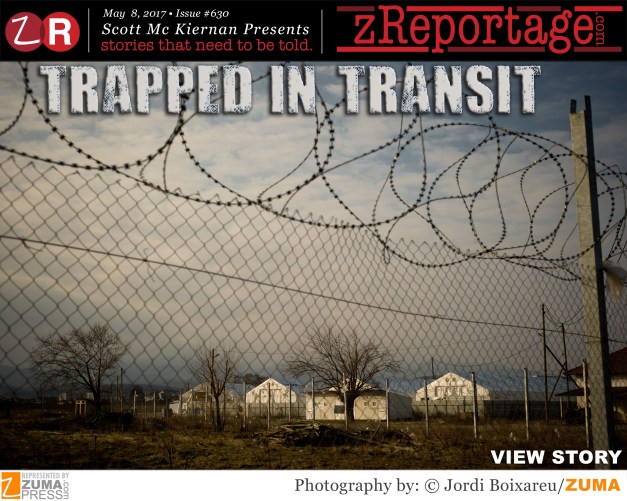
Nearly 75,000 refugees and migrants, including an estimated 24,600 children, currently stranded in Greece, Bulgaria, Hungary and the Western Balkans are at risk of psychosocial distress caused by living in a protracted state of limbo, according to a recent report by UNICEF. Macedonia was one of the countries that was majorly affected by the refugee movements towards Western Europe in the second half of 2015 and the beginning of 2016. However, it was not a destination itself, but rather a transit country. On the 8th of March 2016 the “Western Balkan route” was officially closed to the refugees. One of the problems which arose out of this situation was that the refugees were at greater risk of becoming victims of human trafficking, as the majority of them started turning to smugglers in order to reach their final destination. In the Republic of Macedonia, there are two Temporary Transit Centers still open. Vinojug and Tabanovce. The refugee transit centre Vinojug near Gevgelija, just north of the border with Greece and the former Yugoslav Republic of Macedonia, looks like a make-shift village. It was opened in the summer of 2015 and has 133 residents now, mostly women and children, stuck between the future they set out to reach and the past they were trying to escape. The residents of Vinojug have little choice but to settle into a routine in their temporary barracks. There’s a set time for breakfast, lunch and dinner. The children go to a temporary school and mothers try to adapt to their new routine, far from everything they know.
 ZUMAland.com