
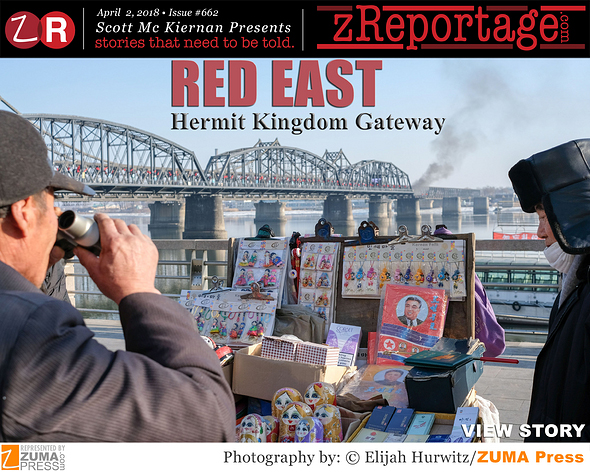
The Yalu River forms a natural 491 mile border between China and North Korea, and along the heavily policed border the sparse landscapes of North Korea are in stark contrast to China’s hyper developing skylines. Increasingly led by China itself, the pressure of the outside world via UN sanctions, US lobbying and regional impatience with North Korea’s continued nuclear tests, is being brought powerfully to bear on their focal point of contact, the river port of Dandong. Hidden away in the far northeastern corner of China, ‘Red East’ as Dadong is known is a city of almost a million, charming and modest in size by Chinese standards, and popular for ‘red tourism’ as Dadong is known, is a city of almost a million, charming and modest in size by Chinese standards, and popular for ‘red tourism’ to nostalgic Korean War sites. As the largest border city in China facing N. Korea, Dadong’s Sino-Korea Friendship Bridge is the main conduit of trade between the two countries, but last December new UN sanctions quieted the trade business. In January China began ramping up security on the border with new surveillance and security forces, and a banner seen on a border fence in Dandong bore the message: ‘ Citizens or organizations who see spying activities must immediately report them to national security.’ Across the half frozen river from the Chinese provinces of Liaoning and Jilin, sentry posts with North Korean guards loom around the clock, but adventurous tourists can still hire speedboat rides to get a closer view of the ‘hermit kingdom’, and Korean influence makes it across the border in the clothing, karaoke, and food. As Kim Jong Un meets in Beijing with Xi Jinping ahead of a potential meeting with Donald Trump, the speculation runs wild, and how it plays out is still anyone’s guess.
 ZUMAland.com