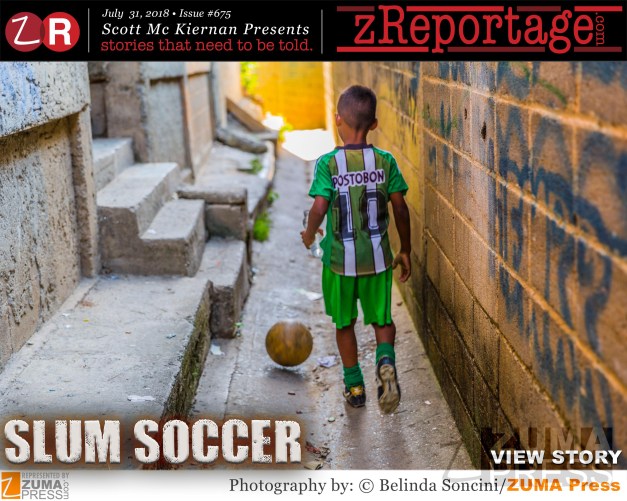
The World Cup may be over but passion for the game burns bright in the world’s most dangerous slum. Petare, is a slum in Caracas Venezuela and home to more than half a million people, it is considered by the United Nations to be the most deadly slum in the world. It is plagued with poverty, drugs, a high murder rate and chronic teen pregnancy. To make matters worse Venezuela is currently suffering its worst economic crisis in modern history. When Ivan Torres and the other coaches formed their soccer schools, there were no grass fields to play on. Children come out of other small streets that shape the veins of the slum and begin following him. It’s the hour they have been waiting for all day. ‘Soccer,’ Torres believes, ‘is more than a game. It’s a way of life that builds character and makes children into men and women.’ Now 41, Torres started playing soccer when he was seven and continued playing throughout his life. He played in tournaments outside of Petare, the slum where he grew up, and won many trophies, but was unable to become a professional. He decided that the tools that soccer taught him would be the way prevent the children in his community from entering a life of crime or ending up dead before they even became men and women. So he created his own informal soccer school. The economic crisis began to affect the children too. Some trainers began to report children fainting on the soccer field due to lack of food and fewer children coming to practice due to their parents’ inability to find food. Severe malnutrition and lack of food began affecting their ability to play soccer. Maria Gabriela Rivas, the sports psychologist of Pasion Petare, explains that through soccer children learn discipline, values, team work, respect, communication, socialization and self esteem. ‘We want soccer to be a project for life,’ Rivas says. ‘We try to make sure children occupy their free time playing and practicing soccer.’ Torres is adamant when he explains that the worst thing that can happen in Petare is to have a child with nothing to do. ‘They will become easy prey for criminals looking to recruit,’ he says. ‘And as you know, Caracas is one of the most dangerous cities in the world. We need to protect our children.’ And we can do it with soccer.