Dixie Chicks performing from the last few years.
Please FTP images as usual and let us know licensing@zumapress.com Thank you!

Dixie Chicks performing from the last few years.
Please FTP images as usual and let us know licensing@zumapress.com Thank you!

February 3, 2020, Des Moines, Iowa, U.S: RICH EYCHANER photographs caucus results with his smart phone at the caucus site for precinct 55 in downtown Des Moines. More than 1,000 voters registered to participate in precinct 55 caucus. The precinct awarded 14 delegates during its caucus.
Scott Mc Kiernan, Founder & CEO, ZUMA Press

October 19, 2018 – Lawrenceville, GA – Gwinnett County Georgia residents wait outside a Voter Registration Office as early voting continued Friday, with some residents waiting nearly two hours at peak times.
Scott Mc Kiernan, Founder & CEO, ZUMA Press

The devastating 2010 earthquake in Haiti left thousands of people homeless and struggling to find shelter and food. Haitians have shown resilience and strength amidst destitution of unimaginable proportions. But one aspect of their lives has come under heavy criticism – their belief in Voodoo. An estimated 60 million people practice Voodoo worldwide. In Haiti, with a population of 11 million people, there is a saying that 70% of the people are Catholic, 30% Protestant, and 100% Voodoo. Voodoo involves the practice of invoking spirits to help people with life in the present world. A bull sacrifice is an expensive ritual that a Voodoo priest might get the honor of performing once a year. In the aftermath of the 2010 earthquake, during the cholera epidemic which was found to be brought to Haiti by UN peacekeepers, more than 40 Voodoo priests were lynched as they were blamed for bringing the disease upon the masses.
Scott Mc Kiernan, Founder & CEO, ZUMA Press

Photo Credit © Yui Mok/PA Wire via ZUMA Press
February 26, 2020, London, UK: Actor Johnny Depp leaving the High Court in London after attending a hearing in his libel case against the publishers of The Sun and its executive editor, Dan Wootton.
Scott Mc Kiernan, Founder & CEO, ZUMA Press

February 24, 2020, Hong Kong, CHINA: Lufthansa Pilot and cabin crew, all wearing protective face masks exit from the arriving hall at Hong Kong International Airport.
Scott Mc Kiernan, Founder & CEO, ZUMA Press
Please FTP images as usual and let us know licensing@zumapress.com
Thank you!
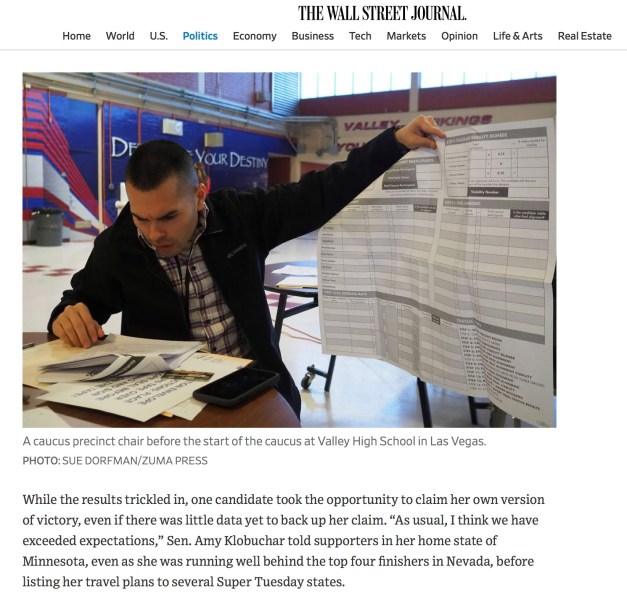
February 22, 2020, Las Vegas, Nevada: A caucus precinct chair reviews the caucus match poster rules prior to the start of the caucus at Valley High School in Las Vegas, Nevada.
Scott Mc Kiernan, Founder & CEO, ZUMA Press

Photo Credit © Carlo Cozzoli/IPA via ZUMA Press
February 23, 2020, Casalpusterlengo, Italy: Residents wait to be given access to shop in a supermarket in small groups of people due to the Coronavirus. People lined up to stock up on food.
Scott Mc Kiernan, Founder & CEO, ZUMA Press
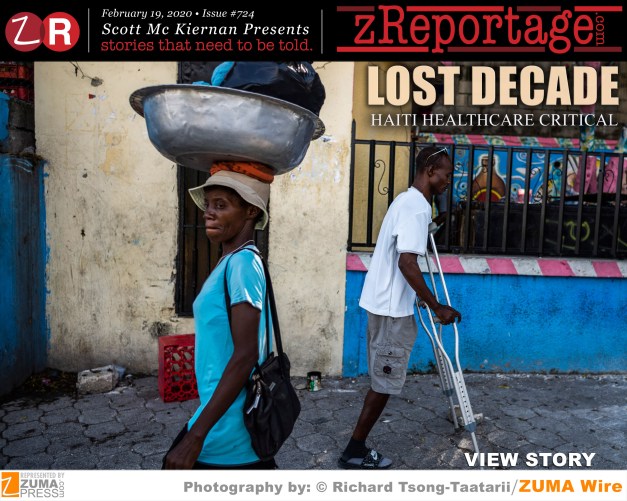
Since July 2018, a deepening political and economic crisis has once again put access to health care in Haiti in jeopardy. While thousands of demonstrators have taken to the streets to protest skyrocketing prices of goods, a lack of economic opportunities, and government misuse of funds, the international community has mostly remained silent. According to the World Bank, more than six million Haitians—about 60 percent of the population of the country—live below the poverty line on less than $2.41 (US) per day, and more than 2.5 million fall below the extreme poverty line of $1.23 per day. This means that most families struggle to buy food or pay for medicines or medical care. The uncertainty and unrest have also led to an increase in violence. Soaring prices have impacted the cost of medications and health access for Haitians, making it that much harder for people to get the care they need. Public and private medical facilities have also been badly impacted by the crisis. All of this has led to critical shortages of health care staff that have left Haiti’s health care system on the brink of collapse.
Scott Mc Kiernan, Founder & CEO, ZUMA Press

