

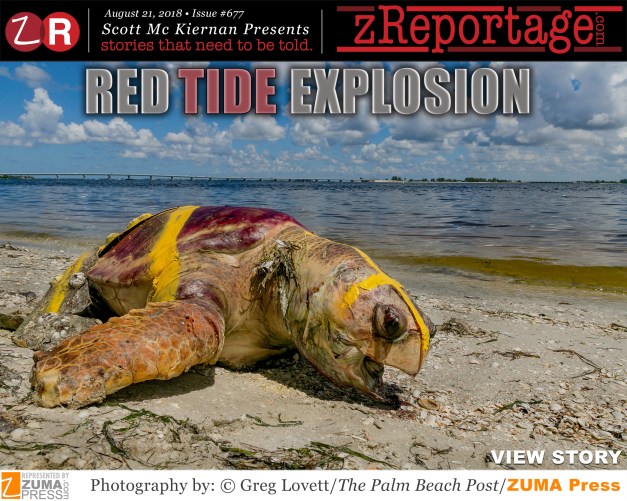
Scientists statewide and with the National Oceanic Atmospheric Administration are trying to understand the lengthy lifespan of this year’s red tide algae bloom which is killing marine life in the waters off southwest Florida in unprecedented numbers. On the fine, shell-dappled beaches of Sanibel Island, the putrid corpses of all manner of sea life are scraped into piles by a rag-tag crew with metal-tined rakes. Matilda Meritt, a cigarette between her lips, rhinestone sunglasses, and a shirt that reads ”wake me when the boring is over,” is on the early shift, dropped off in one of two Greyhound buses every morning for a week since tons of death washed up on these shores. World renowned for the shells left on its curved beaches by gentle currents, Sanibel this summer is under attack by a menacing red tide, an algae confounding scientists with its longevity and overwhelming Florida’s southwest coastline with mountains of dead fish, turtles and manatees. Florida Gov. Rick Scott declared a state of emergency over the ongoing harmful bloom that is killing tons of marine life, the rolling death tally is 30 percent higher than the five-year average, according to the Florida Fish and Wildlife Conservation Commission. Red tide is a systematic killer, working its way up the food chain from little snails on sea grasses eaten by manatees to fish eaten by turtles, birds or bigger fish. The toxin it produces affects the nervous system. Brown pelicans stumble about and lose their waterproofing because they can no longer preen. Turtles swim in circles. Manatees drown, unable to lift their snouts above water. Some of the animals that come into the care of veterinarian Robin Bast at the Clinic for the Rehabilitation of Wildlife on Sanibel are so weak they can’t blink their eyes… ”We don’t name them,” Bast emphasizes. ”I’ve been here eight years. This is the worst in eight years.” But at least Bast’s animals have a fighting chance. The Florida Fish and Wildlife Conservation Commission has documented almost 300 sea turtle deaths in the waters off southwest Florida since the bloom started last October.
ASAP Please FTP pictures as usual, then email Licensing@zumapress.com
Thanks, Katrina

“Here, the German Wirtschaftsminister Peter Almaier (Minister for Economy and Energy) visited the German Aerospace Center near Munich and spoke to astronaut Alexander Gerst who was aboard the ISS. The call took place from the Columbus Control Center of the German Space Operations Center.” – Sachelle Babbar
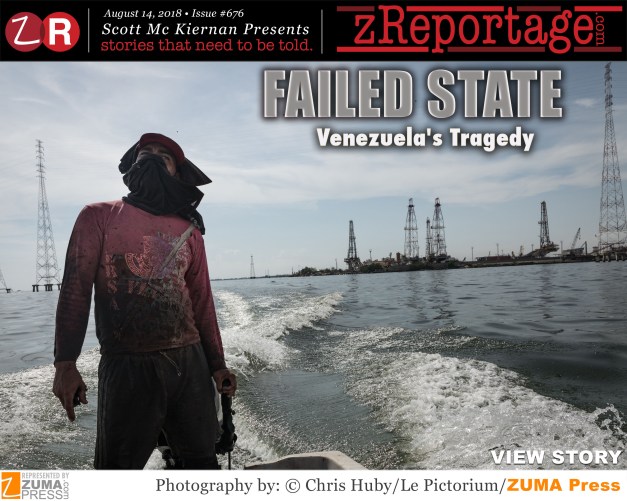
Venezuela is rich in oil. It has the largest proven oil reserves in the world. But it is arguably precisely this wealth that is also at the root of many of its economic problems. The drop in oil prices has not just devastated the Venezuelan economy, it’s causing an environmental crisis as well. An oil spill that happened in May still covers the shoreline of Lake Maracaibo. The oil wells have been abandoned, and production has slowed to a 13 year low. Which means little is being done to stop oil spills. Fishing is the main source of income for many people who live on the shores of the lake. The constant oil spills and leaks is damaging their livelihood, and 15,000 barrels of oil have spilled into the lake in the last two months alone. Fishermen resort to smuggling fish to sell in Colombia to earn enough to feed their families. Maracaibo is the second largest city of Venezuela and the lake contains one of the largest reserves of oil in the world. With its two million inhabitants, the city was built by the US at the start of the 20th century to help expand the oil industry. Up until 2013, Maracaibo was a rich city.