Please FTP any coverage of this story today, then email Licensing@zumapress.com
Thanks, Katrina

Please FTP any coverage of this story today, then email Licensing@zumapress.com
Thanks, Katrina
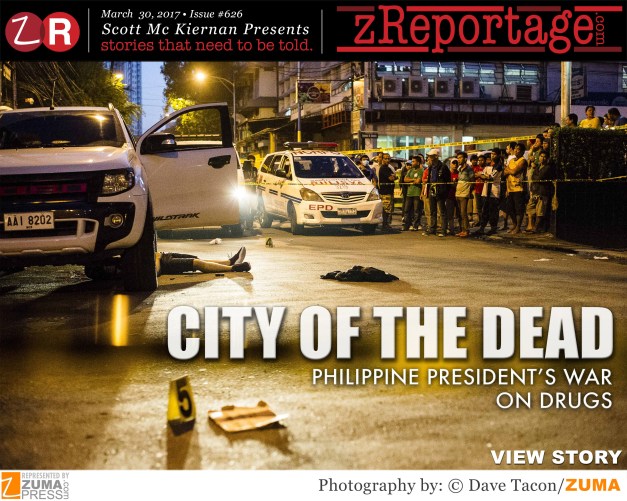
Full multimedia experience: audio, stills, text and or video: Go to zReportage.com to see more – Ever since Rodrigo Duterte was voted in as Philippines President in June 2016, he has been making good on his threats of ‘Killing all criminals’ during a campaign that promised to bring law and order to the Philippines through the barrel of a gun. Overwhelmingly, death comes by night in the poorest quarters of the Philippine capital, Manila which has become one of the murder capitals of the world. Bloodied corpses are sprawled in the street in a never ending array of grotesque tableaux. Sometimes a warning scribbled on a scrap of cardboard is left by the body: ‘I’m a pusher. Don’t be like me.’ In the nine months since Duterte took office, the total body count of suspected drug dealers or users tops 8,000 with an estimated 4,000 of those deaths vigilante or extrajudicial killings. Duterte has made the drug war his signature issue, and he vowed to clean up the problem in six months. He recently announced that he had ‘miscalculated’ and that the problem was larger than he realized. He vowed to continue the drug war ‘until the last pusher is out in the streets, until the last drug lord is killed.’ The spate of killings has drawn condemnation from human rights groups that contend many of the deaths amount to illegal executions.
Please send anything post 2010 and can be USA or abroad…
Let us know if you have anything by emailing licensing@zumapress.com
And FTP your images as usual.
Thank you, Florence.
Please FTP your pictures as usual today, then email Licensing@zumapress.com Thanks, Katrin


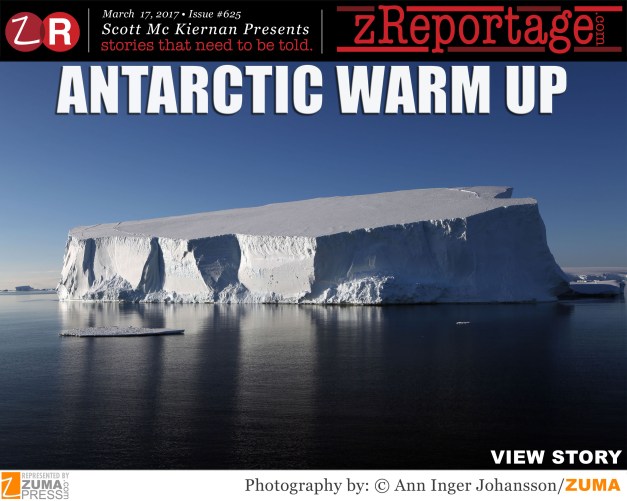
Researchers record the hottest ever reading on Earth’s coldest continent where temperatures usually range between 14F and -76F. Temperatures in Antarctica reached an unprecedented 63.5F on March 24, 2015, the U.N. weather agency has announced on March 2017. Over the past 50 years, the west coast of the Antarctic Peninsula has been one of the most rapidly warming parts of the planet, with its glaciers in accelerated retreat in the last 12 years. Air temperature increases of 3 degrees in the Antarctic Peninsula, which is 5 times the mean rate of global warming as reported by the Intergovernmental Panel on Climate Change IPCC. This change can also be noted in the Southern Ocean which is warming more rapidly than the global ocean as a whole. Antarctica’s immense ice sheet is up to 4.8km thick and contains 90% of the world’s fresh water, enough to raise sea level by around 60 meters were it all to melt. The warming of the Peninsula has reshaped the physical and living environment of the region. The distribution of penguin colonies has changed as the sea ice conditions alter and on land has resulted in increased colonization by plants. A long-term decline in the abundance of Antarctic krill may be associated with reduced sea ice. Many glaciers have retreated and ice shelves that formerly fringed the Peninsula have retreated in recent years, some have collapsed completely. Adélie penguin populations have been declining in recent years due to reductions in krill populations. Emperor penguins are highly vulnerable and are predicted to suffer as the world’s average temperature increases. Climate change in Antarctica will thus have dramatic effects both globally and locally.

